Process and cost factors
Deposits and staged payment structures in principle
The short answer
Most bathroom jobs are paid in stages rather than as a single lump sum, tied to progress rather than to time passed. Understanding the logic behind this protects both sides.
Want a professional to handle it?
See your fixed price in 24 hours
Calls answered 8am-6pm Mon-Fri · missed calls returned the same day.
"A master of his class, gone above & beyond to deliver exactly what I wanted, to an extremely high spec.", Jamie, verified review
Frequently asked
Is it normal to pay for materials up front?
It's common, since many items need ordering and paying for before the fitter has them in hand, but this should be itemised rather than a vague lump sum.
Should I withhold the full final payment until snagging is done?
Withholding a reasonable, previously agreed amount until snagging is resolved is a fair and common approach.
How it works in practice
A deposit at the start typically covers materials being ordered, since sanitaryware and tiles often need paying for before they arrive on site.
Interim payments are usually linked to a completed stage, such as first fix or tiling, rather than to a fixed calendar date.
A final payment held back until snagging is resolved gives both sides a reasonable incentive to finish the job properly.
Payment terms should be agreed in writing before work starts, including what happens if a stage is delayed through no fault of either party.
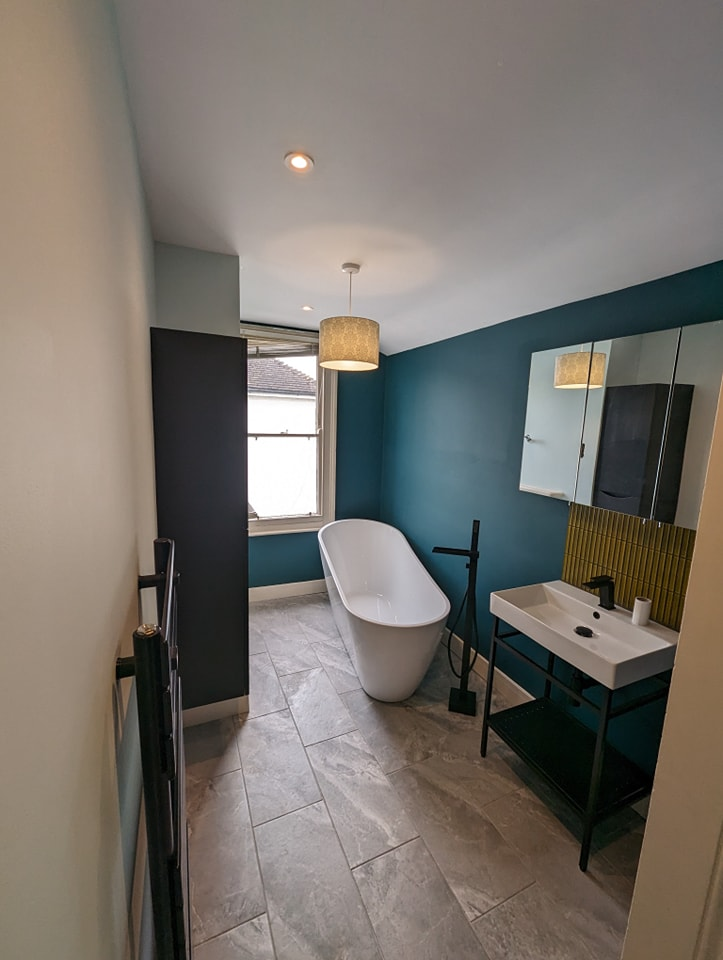
Getting staged payments explained right first time
Describe what is there now and what is bothering you. It is usually clear within a message or two whether this is straightforward or needs a look.
Related services
Covering Gloucester, Cheltenham, Tewkesbury, Stroud, Malvern, Ledbury, Newent and Ross-on-Wye