Process and cost factors
Aftercare and sealant maintenance after the fitters leave
What happens in the weeks after a bathroom is finished has a real effect on how long it lasts. Sealant, grout and ventilation habits all need a small amount of ongoing attention.
Where jobs go wrong
Any movement cracks that appear at the wall-to-bath or wall-to-floor junction are worth re-sealing promptly rather than left, since they widen with use.
Want a professional to handle it?
See your fixed price in 24 hours
Calls answered 8am-6pm Mon-Fri · missed calls returned the same day.
"A master of his class, gone above & beyond to deliver exactly what I wanted, to an extremely high spec.", Jamie, verified review
Common questions
How often should sealant be replaced?
There's no fixed schedule, it depends on use and ventilation, but any sign of mould, lifting or gaps is a signal to redo it rather than wait.
Is mould on grout a sign of a failed installation?
Not necessarily, it's often a ventilation or cleaning habit issue, though persistent mould behind tiles can point to a waterproofing problem worth investigating.
The moving parts
- 1
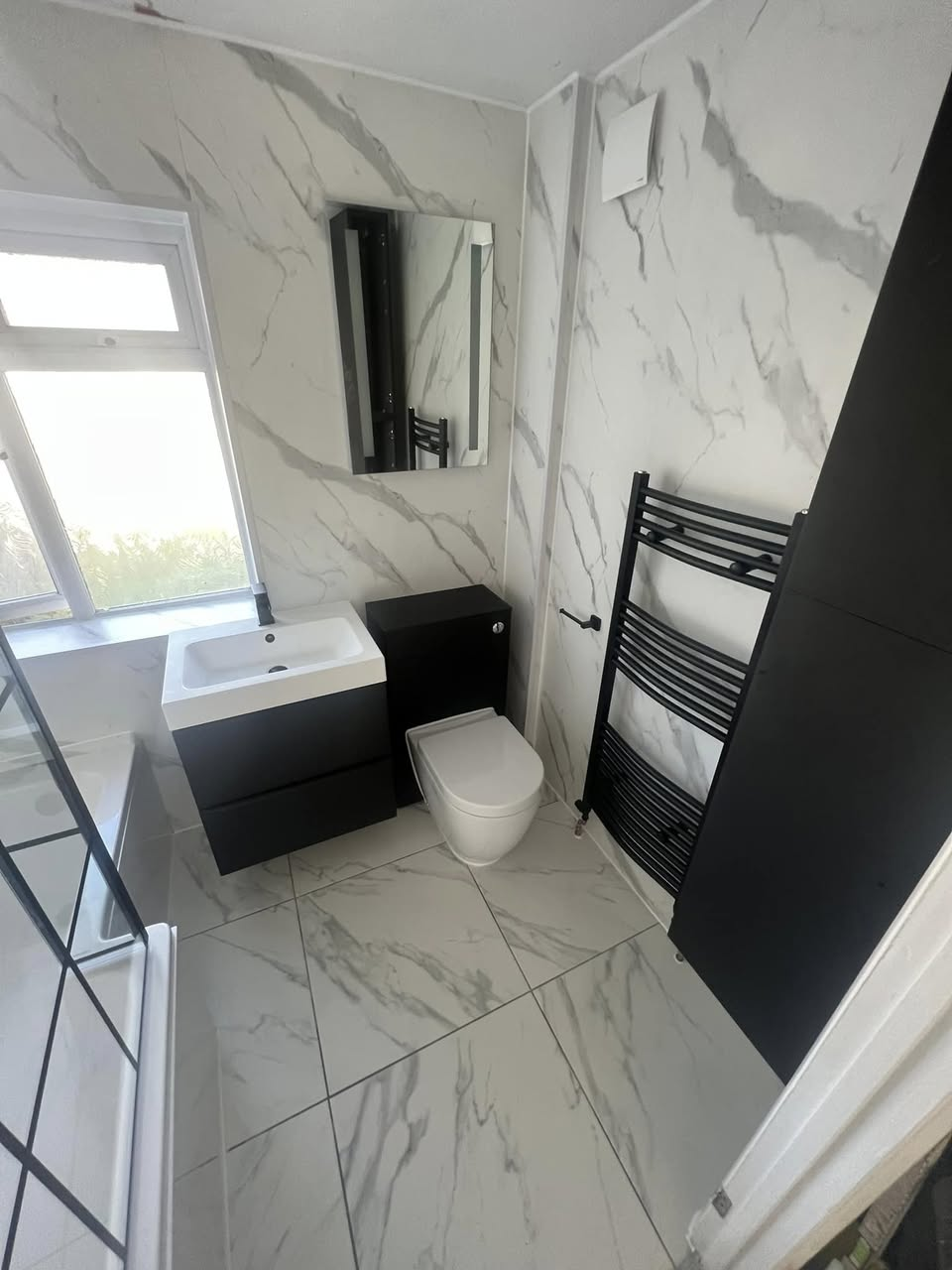
Silicone sealant around baths and shower trays should be checked periodically and replaced if it starts to lift or discolour, since a failed seal lets water into the floor below.
- 2
Grout lines benefit from a wipe-down rather than being left to accumulate soap scum, which is far easier to remove early than once it's set in.
- 3
Running the extractor fan for a period after every shower or bath, or using the run-on timer, keeps residual moisture from settling into grout and paintwork.
- 4
Any movement cracks that appear at the wall-to-bath or wall-to-floor junction are worth re-sealing promptly rather than left, since they widen with use.
Second opinion on aftercare and sealant maintenance
If you already have a quote or a design and something does not sit right, it is worth another set of eyes before work starts.
Related services
Covering Gloucester, Cheltenham, Tewkesbury, Stroud, Malvern, Ledbury, Newent and Ross-on-Wye