Process and cost factors
Why a small bathroom isn't automatically a cheap one
It's a common assumption that a smaller room means a smaller job, but labour is driven by what's being done, not by floor area. A tiny cloakroom with awkward access can take as long as fitting out a much larger room.
How it works in practice
Point 1
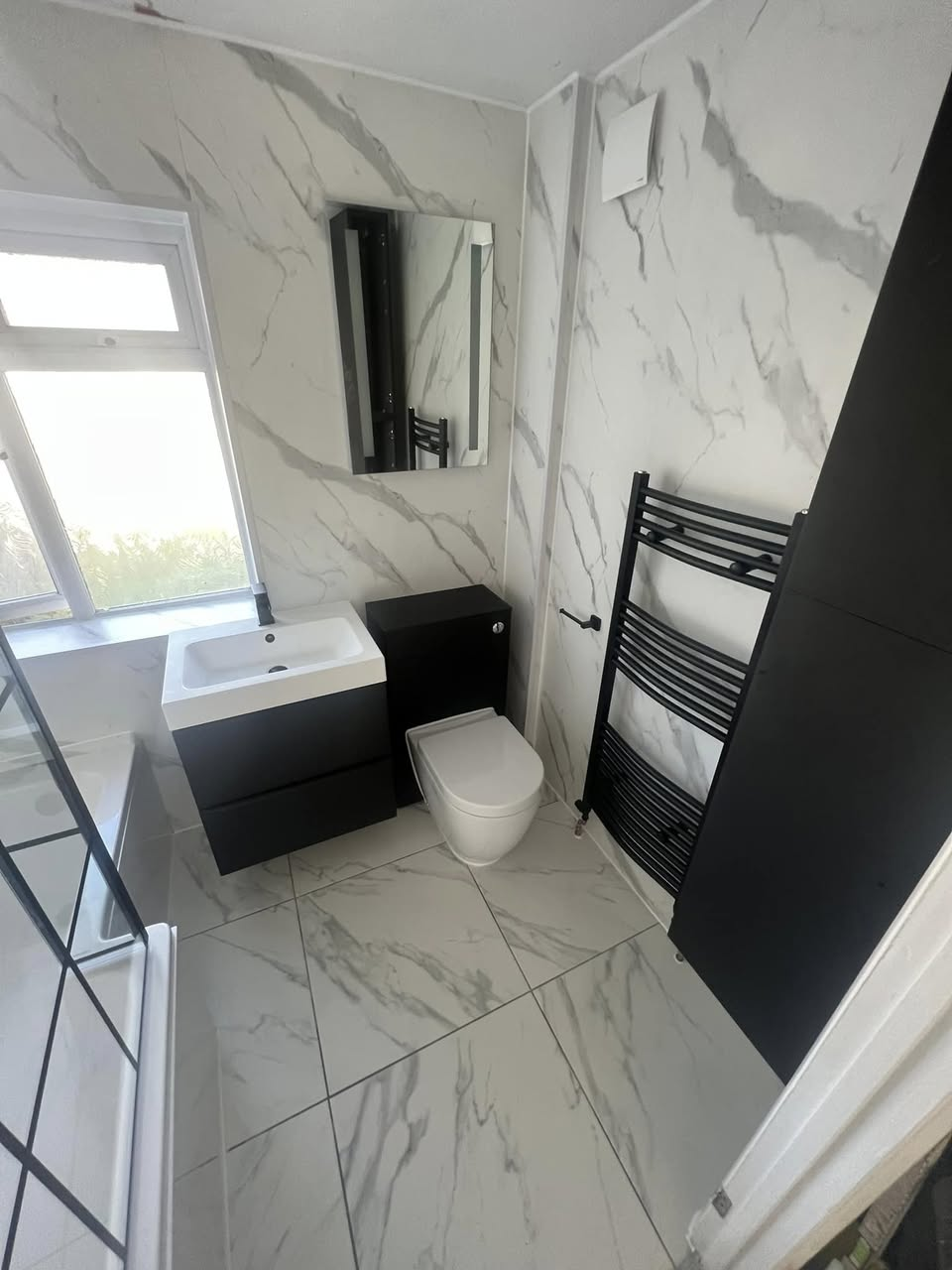
Cutting tiles around fittings in a tight space takes as long, or longer, than tiling a larger open wall, because there are more edges relative to the area.
Point 2
Awkward access, under stairs, in a loft, in a converted cupboard, slows down every trade working in that space compared with a standard-sized room.
Point 3
The number of services being fitted stays similar regardless of room size: a WC, basin and shower still each need their own supply and waste.
Point 4
Materials such as tiles and sealant have practical minimum order quantities, so a small room doesn't always benefit from buying less.
Want a professional to handle it?
See your fixed price in 24 hours
Calls answered 8am-6pm Mon-Fri · missed calls returned the same day.
"A master of his class, gone above & beyond to deliver exactly what I wanted, to an extremely high spec.", Jamie, verified review
Common questions
Does a smaller suite always mean less labour?
Not necessarily, the same trades and stages are involved whether the room is small or large, and awkward access can add time rather than remove it.
Is it worth combining a small bathroom job with other work to save time?
It can help with scheduling and reduce repeated site visits, but it doesn't reduce the fundamental labour needed for the bathroom itself.
Other guides you may want
Ready to get the room measured up?
Photos of the existing room and the position of the soil stack help enormously before a visit.
Related services
Covering Gloucester, Cheltenham, Tewkesbury, Stroud, Malvern, Ledbury, Newent and Ross-on-Wye