Situations and planning
Refresh or full rip-out: how to actually decide
The honest test isn't how the bathroom looks but what's happening behind it, sound, dry walls and floors with tired finishes are a genuine candidate for a refresh, while any sign of past leaks, failing waterproofing or pipework due for replacement usually means a refresh is a false economy that gets undone within a few years.
Planning points
- Check for soft flooring
- movement in wall tiles, or discolouration at grout lines, since these point to moisture behind the surface that a cosmetic refresh won't resolve.
- Consider the age and condition of pipework and the WC's flush mechanism specifically
- replacing tiles around fittings that fail within a couple of years means paying for the disruption twice.
- A refresh, regrouting, re-sealing, replacing
- a tired vanity or repainting, can genuinely transform a sound bathroom's appearance for a fraction of a full refit's cost and disruption.
- Where layout genuinely doesn't work for the household
- poor storage, an awkward shower position, no amount of refreshing solves that, and it's a sign a full rip-out is the more honest answer.
Want a professional to handle it?
See your fixed price in 24 hours
Calls answered 8am-6pm Mon-Fri · missed calls returned the same day.
"A master of his class, gone above & beyond to deliver exactly what I wanted, to an extremely high spec.", Jamie, verified review
Your questions answered
How do I know if what looks like a cosmetic problem is actually structural?
Soft or bouncy flooring, tiles that sound hollow when tapped, or persistent damp smell are signs of an underlying issue a refresh won't fix, worth having checked before committing to either route.
Is a refresh ever a waste of money?
Yes, if it's covering up an underlying leak or waterproofing failure, the finish will look fine briefly before the same problem reappears, at which point the refresh cost is lost.
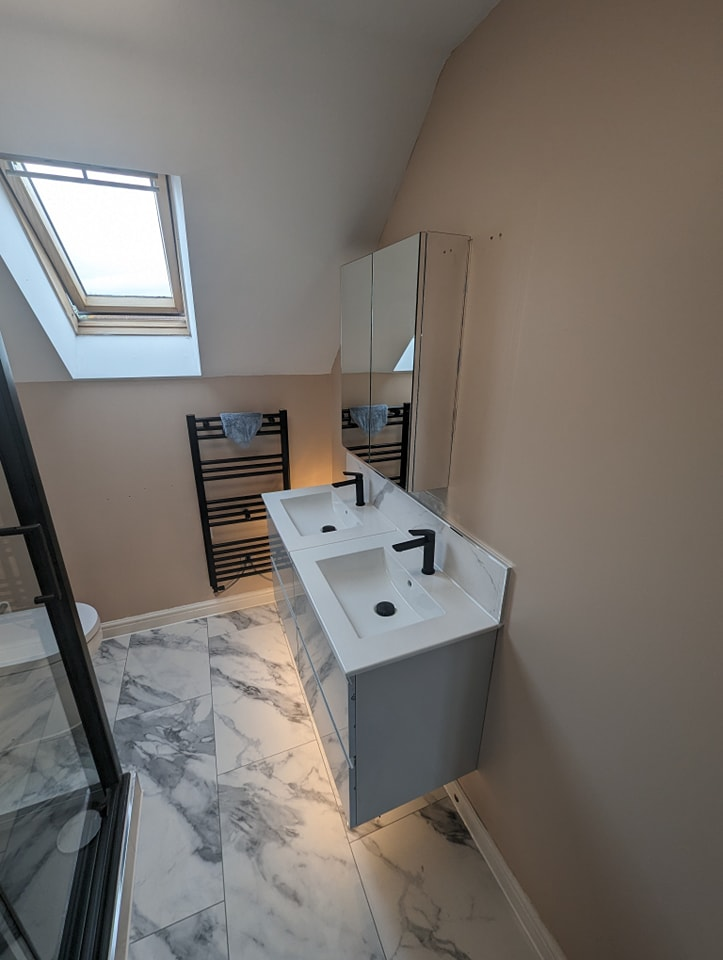
Not sure which option suits your property?
Most of these decisions come down to what is behind the wall and under the floor. A site visit settles it quickly.
Related services
Covering Gloucester, Cheltenham, Tewkesbury, Stroud, Malvern, Ledbury, Newent and Ross-on-Wye