Process and cost factors
How long a bathroom refit realistically takes
Timelines depend far more on drying times and the number of trades involved than on the size of the room. A small bathroom with new waterproofing and moved services can take longer than a large one that's a straight swap.
Common mistakes to avoid
Tiling itself is quick; it's the adhesive and grout curing between stages that adds days that are easy to underestimate.
Want a professional to handle it?
See your fixed price in 24 hours
Calls answered 8am-6pm Mon-Fri · missed calls returned the same day.
"A master of his class, gone above & beyond to deliver exactly what I wanted, to an extremely high spec.", Jamie, verified review
Questions we get asked
Does a like-for-like swap take much less time?
Generally yes, because there's no new waterproofing or service relocation to wait on, but flooring and tiling still need their normal drying time.
Why do fitters give a range rather than a fixed number of days?
Because drying times can shift with ventilation, temperature and the specific products used, all of which are outside the fitter's direct control.
How it works in practice
Point 1
Strip-out and first fix typically take a matter of days, but waterproofing and screed need proper curing time before anything else can happen.
Point 2
Tiling itself is quick; it's the adhesive and grout curing between stages that adds days that are easy to underestimate.
Point 3
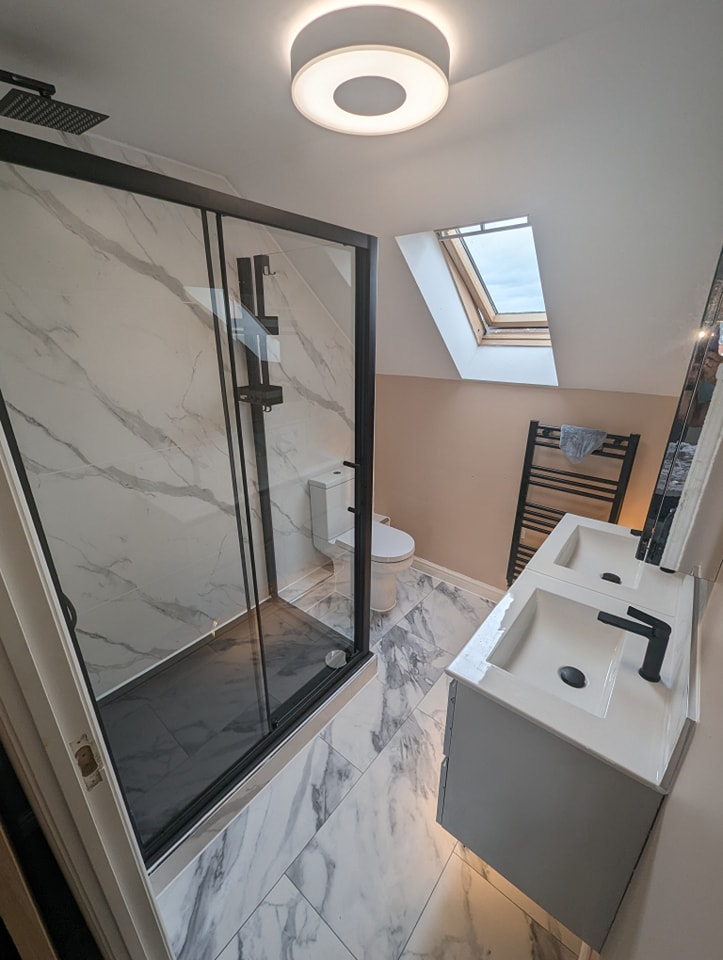
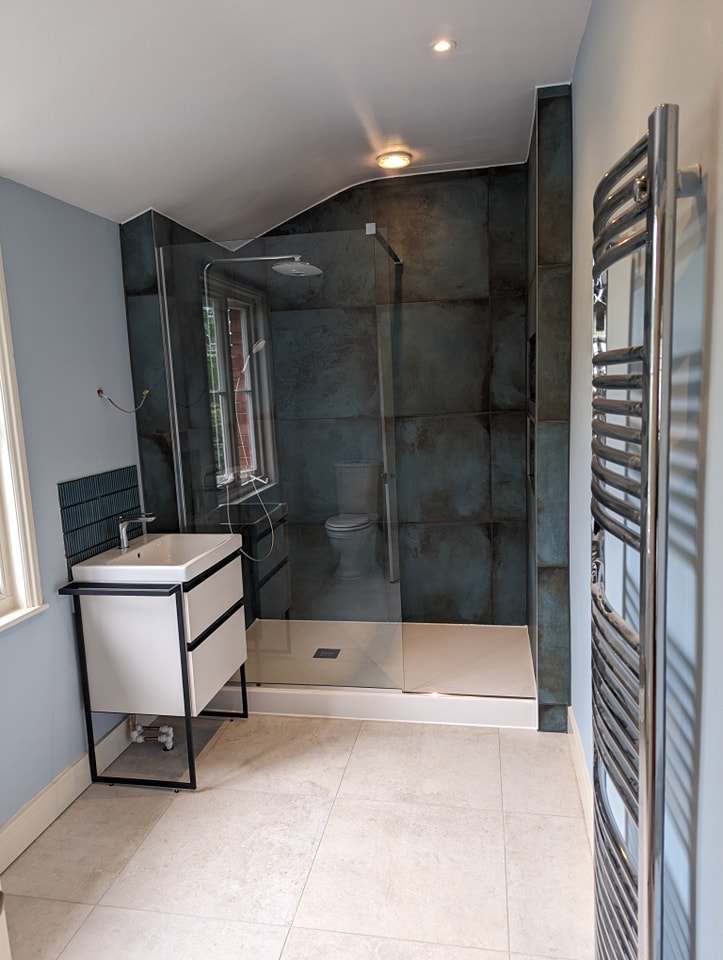
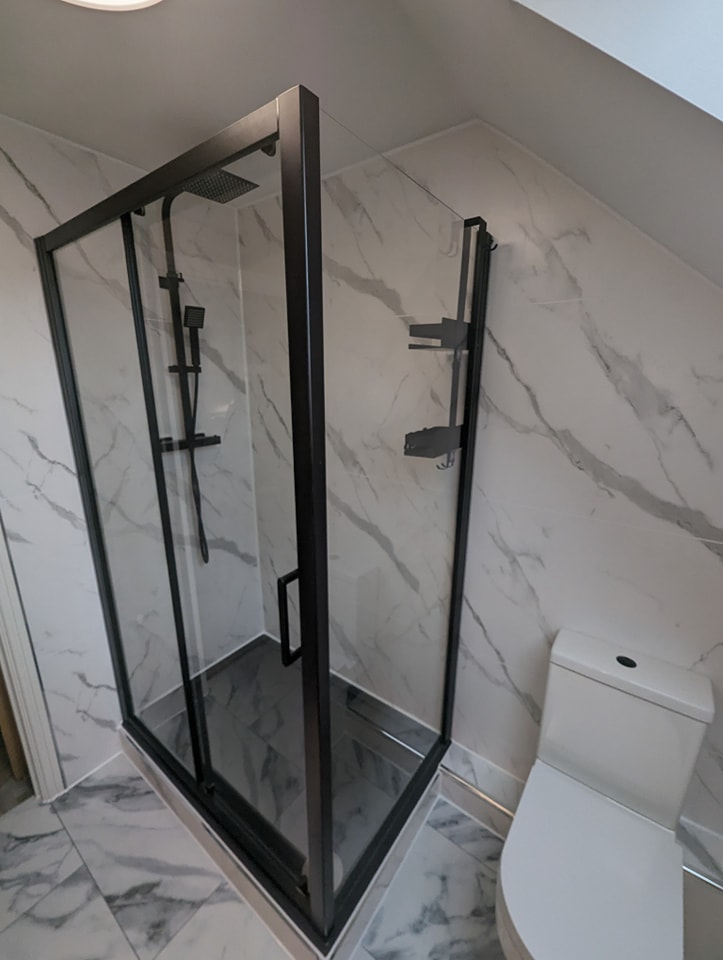
Bringing in tiled niches, feature walls or natural stone extends timelines because these materials often need longer settling and sealing periods.
Point 4
A realistic programme builds in a buffer for at least one unexpected finding once the old suite is removed.
Planning bathroom timelines?
Tell us the town or postcode and roughly what stage you are at. We'll tell you honestly whether it is a job we can take on.
Related services
Covering Gloucester, Cheltenham, Tewkesbury, Stroud, Malvern, Ledbury, Newent and Ross-on-Wye