Bathroom types
Traditional bathroom schemes in period homes
A traditional scheme in an older house has to respect the room's proportions. Fittings that look right in a high-ceilinged room look heavy in a low one.
Your questions answered
Are traditional fittings less efficient?
Some period-style showers have lower flow characteristics; the valve choice and system pressure matter more than the styling.
Can I keep an original cast-iron bath?
Often yes, if the floor structure supports the filled weight and the enamel can be restored rather than replaced.
The practical constraints
Point 1
Exposed pipework in period-style finishes is a deliberate choice, it needs neat, planned routes because nothing is hidden behind board.
Point 2
High-level or close-coupled cisterns, roll-top baths and pillar taps all need floor and wall fixings planned before boarding.
Point 3
Panelling to dado height is practical as well as period-correct: it protects the wall and hides slight unevenness in old plaster.
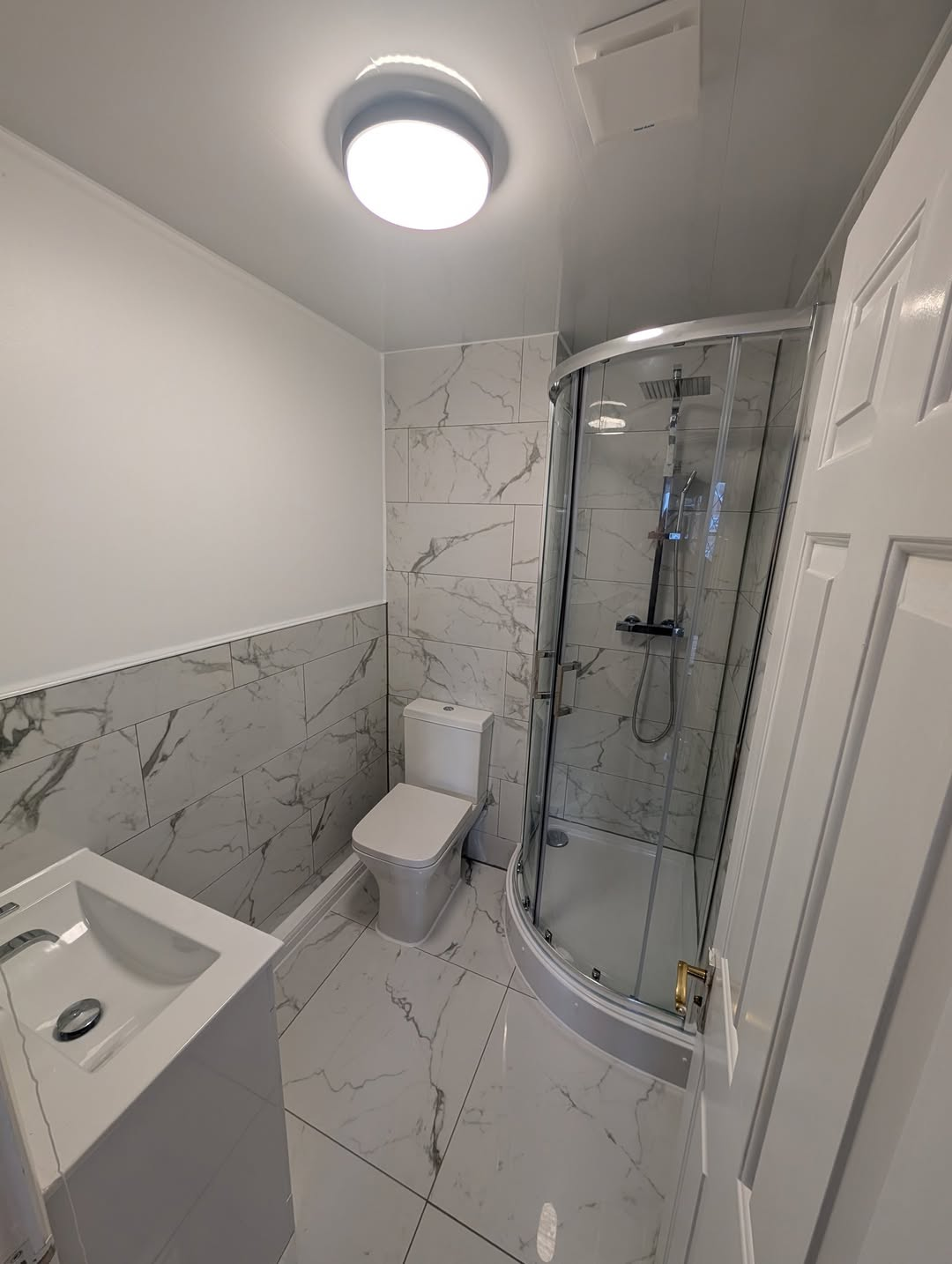
Where this fits with our work
Planning traditional bathrooms?
Tell us the town or postcode and roughly what stage you are at. We'll tell you honestly whether it is a job we can take on.